 JAPAN'S BEST-DESIGNED COWORKING SPACES
Q&A
How do I pay at a coworking space in Japan?
Most drop-in spaces take cards, and several take no cash at all. SENQ's drop-in accepts credit cards, transit IC cards, Apple Pay, iD and QUICPay but not cash, and NAKANO HAKO is cashless only.
Cards and e-money, no cash
SENQ's drop-in, offered at Kyobashi, Kasumigaseki, Roppongi, Meguro and Aoyama Namikidori, accepts credit cards and e-money: transit IC cards, Apple Pay, iD and QUICPay.
Cash is not accepted, and cards cannot be topped up at the desk. You sign up at reception without booking; it costs ¥550 an hour plus a one-time ¥550 joining fee.
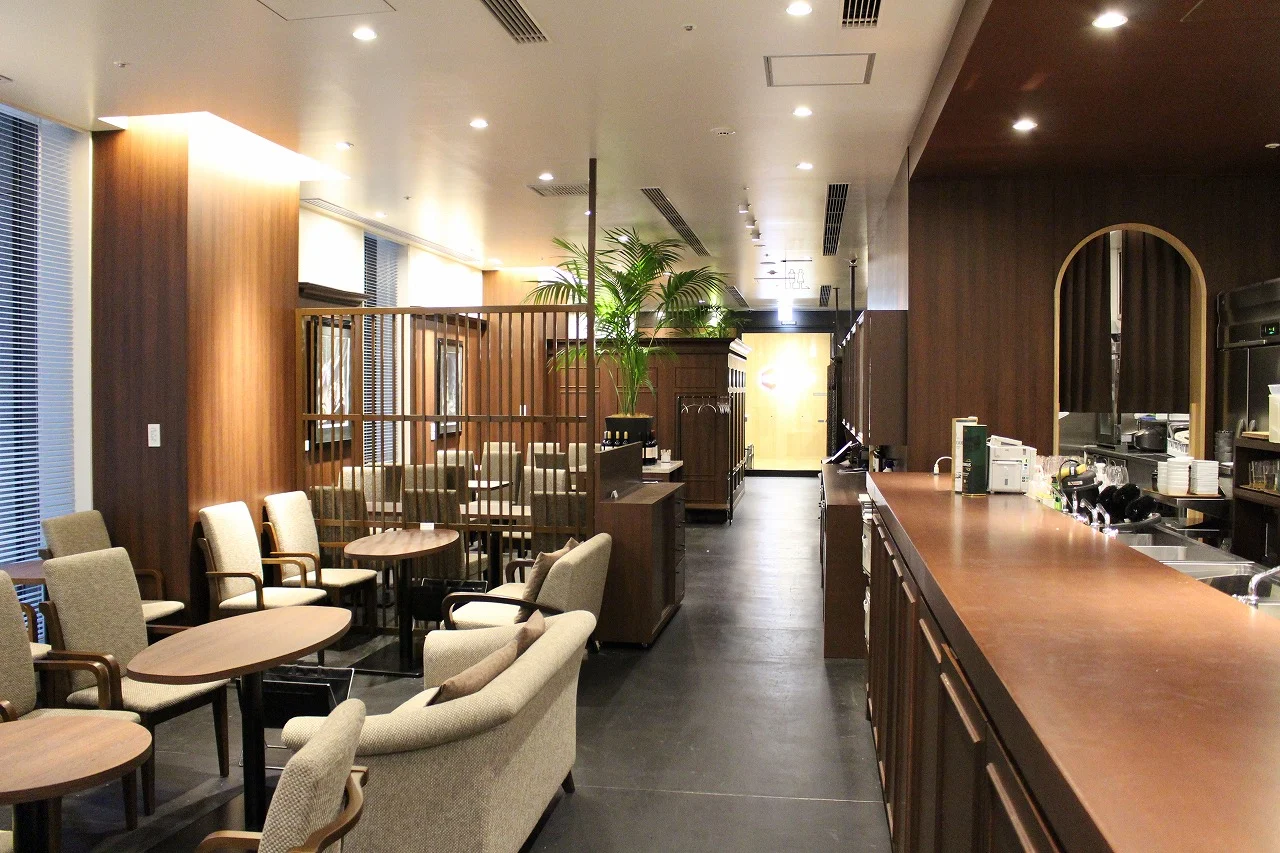
Cashless only
NAKANO HAKO takes credit cards, e-money and QR payments, and no cash.
You check in at reception and wear a user card while you are inside; private booths can be booked in the SHARE LOUNGE app.
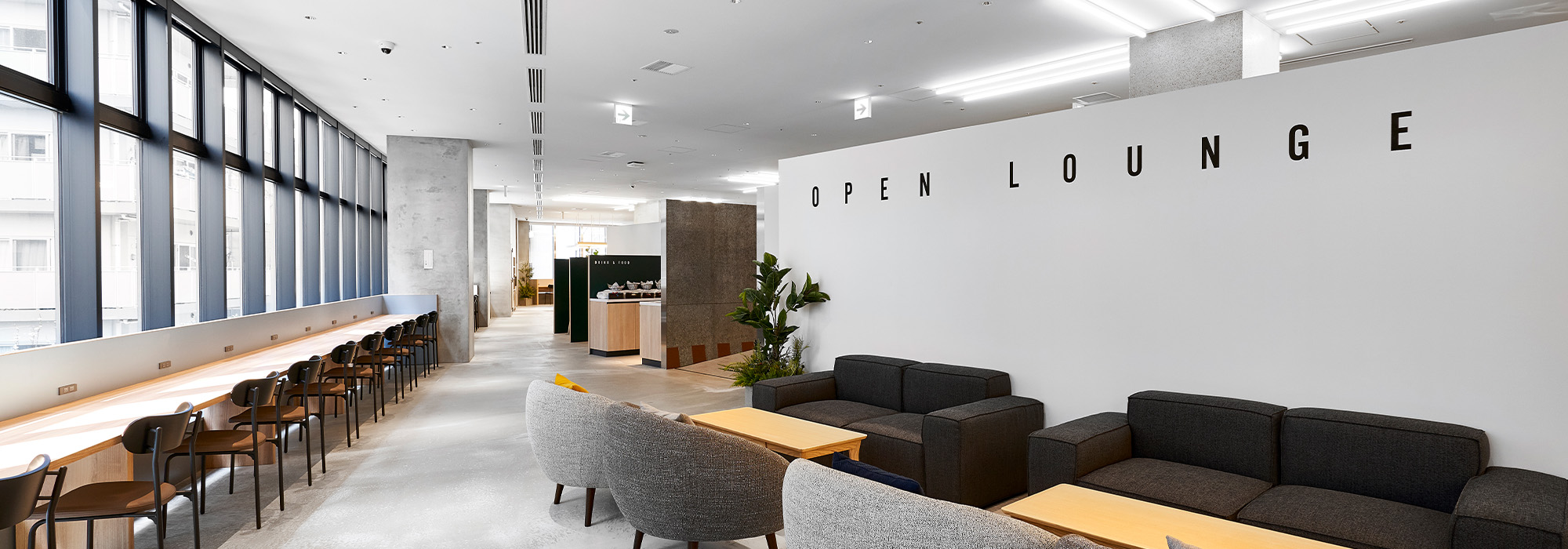
Cash, card, e-money or PayPay
At Noblesse Oblige in Kashiwa you register at the staffed reception on your first visit and pay by cash, credit card, e-money or PayPay.
Drop-in is ¥660 an hour or ¥1,980 a day.

BasisPoint Shimbashi Ginzaguchi →
Pay when you leave
BasisPoint lets you register free at reception, sit anywhere in the open space and pay for the time you used when you leave.
It accepts cash, credit cards, e-money and QR payments; drop-in starts at ¥330 per 30 minutes with a daily cap.
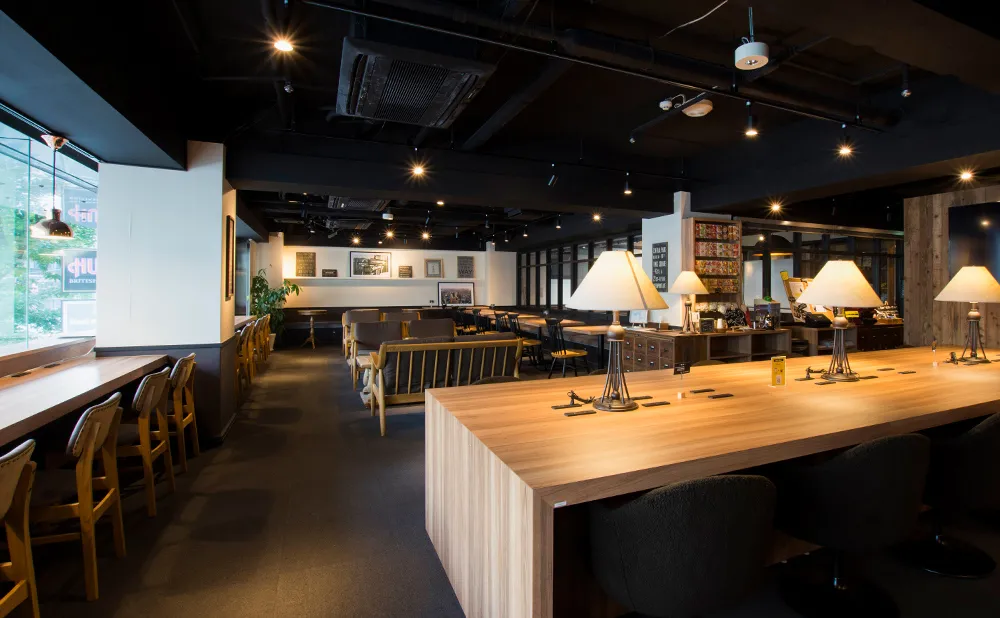
An app, or cash at the hotel desk
Rembrally Cafe in Ebina has no staff: you unlock the door and pay in the Threes app, from ¥250 for the first 30 minutes up to ¥1,500 a day.
Visitors who prefer cash apply and pay at the front desk of the hotel next door.
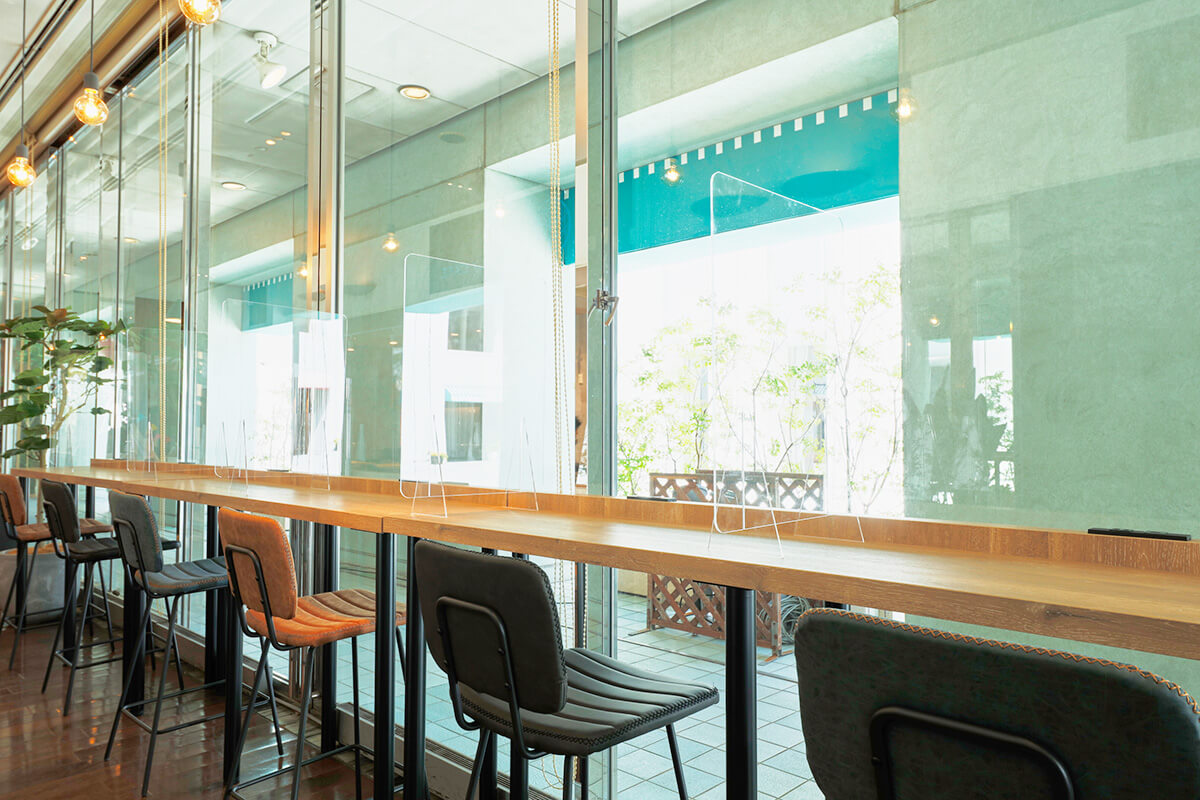
What is a transit IC card?
Suica and PASMO are the rechargeable cards used on trains and buses around Tokyo. Many shops also accept them as e-money.
SENQ lists transit IC cards among its payment methods, and at H¹T members can register one as their door key.
Other questions
